Friday Namaz Rakat
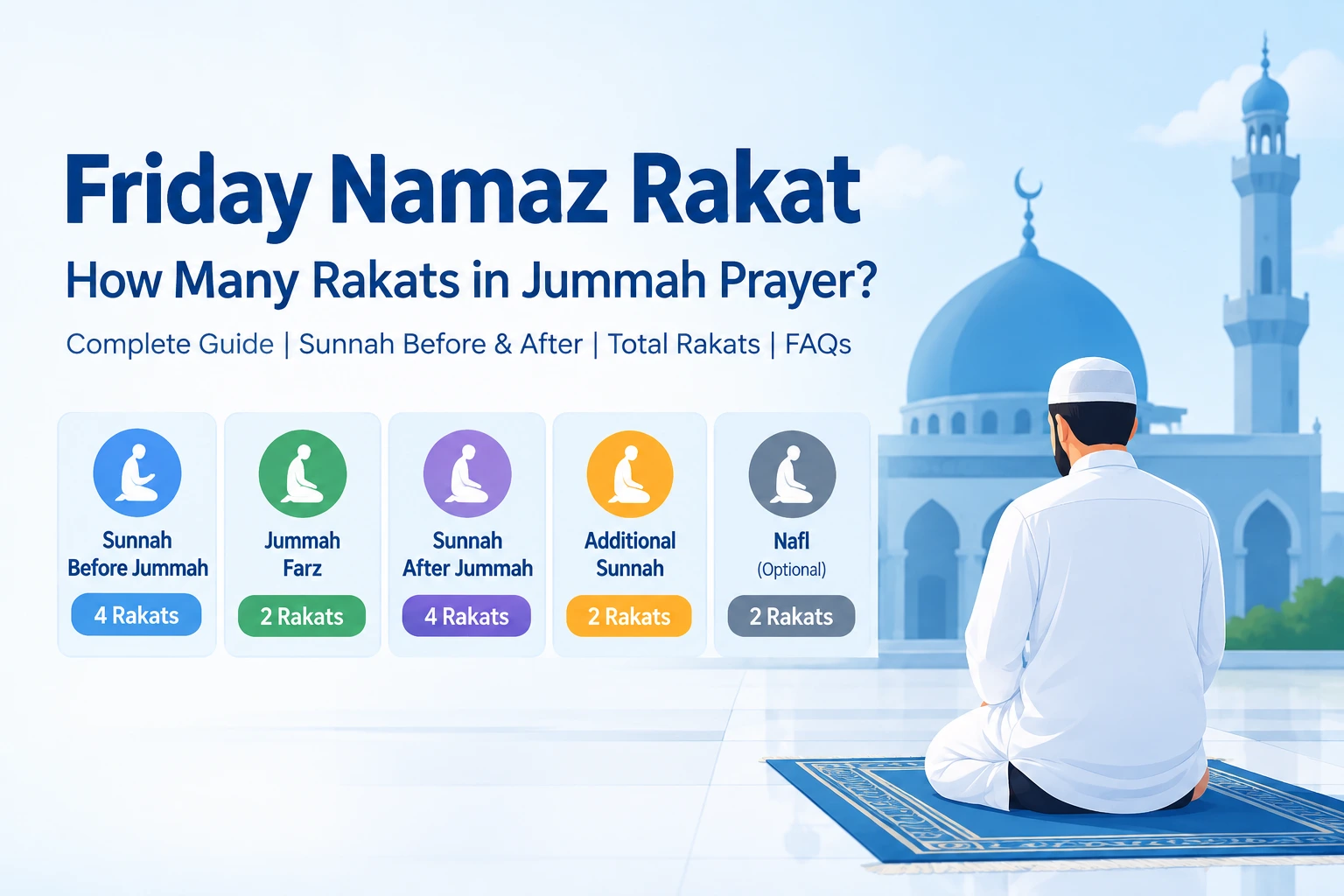
How Many Rakats Are in Jummah Prayer? A clear breakdown of the Farz and Sunnah rakats offered on Friday, following the commonly practiced Hanafi tradition.
Introduction
Friday Namaz Rakat is a common search query among Muslims who want to understand how many rakats are offered during Jummah prayer. Friday, known as Jummah in Islam, is a special day when Muslims gather in mosques to perform the Friday prayer.
Many people have questions such as: How many rakats are in Jummah prayer? How many are Farz? How many Sunnah rakats should we pray before and after Jummah? In this detailed guide, we explain Friday Namaz Rakat in simple English, including the commonly followed Hanafi practice, the difference between Farz and Sunnah, and answers to frequently asked questions.
How Many Rakats Are in Friday Namaz?
The obligatory Jummah prayer consists of 2 Farz rakats, which are performed in congregation behind the Imam after the Khutbah. In the commonly followed Hanafi practice, Muslims also offer Sunnah prayers before and after the obligatory Jummah prayer.
| Prayer | Rakats | Classification |
|---|---|---|
| Sunnah Before Jummah | 4 | Sunnah |
| Jummah Farz | 2 | Obligatory |
| Sunnah After Jummah | 4 | Sunnah |
| Additional Sunnah | 2 | Sunnah |
| Optional Nafl | 2 | Optional |
| Total with Nafl | 14 | Practice-dependent |
Note: The arrangement and classification of Sunnah prayers can vary according to the madhhab. Muslims should follow their trusted scholar’s guidance and established prayer practice.
Why Does Jummah Prayer Have 2 Farz Rakats?
Jummah prayer is different from the regular Zuhr prayer performed on other days. On Friday, eligible Muslims attend the congregational Friday prayer, which includes a Khutbah delivered by the Imam. The Khutbah is followed by 2 Farz rakats offered in congregation.
Basic Process of Jummah Prayer
- 1Perform Wudu and prepare for the mosque
- 2Offer Sunnah prayer before Jummah, according to your practice
- 3Listen attentively to the Imam’s Khutbah
- 4Perform 2 Farz rakats behind the Imam
- 5Offer Sunnah and optional Nafl prayers after Jummah, according to your practice
Listening attentively to the Khutbah is an important part of Jummah prayer etiquette. Avoid unnecessary talking or distractions during the sermon.
1. Four Sunnah Rakats Before Jummah
In the Hanafi tradition, offering 4 Sunnah rakats before Jummah is a commonly followed practice. These rakats are performed before the Friday congregational prayer and Khutbah.
How to Offer the Prayer
- 1Make the intention (Niyyah) for the Sunnah prayer
- 2Perform 4 rakats according to your established prayer practice
- 3Complete the prayer following the method you have learned from a trusted scholar
2. Two Farz Rakats of Jummah Prayer
The most important obligatory part of Jummah prayer is the 2 Farz rakats. After the Imam delivers the Khutbah, the congregation stands for the Friday prayer.
How to Perform the 2 Farz Rakats
- 1Stand in the prayer row with the congregation
- 2Make the intention to pray Jummah behind the Imam
- 3Follow the Imam through the 2 Farz rakats
- 4Complete the prayer by following the Imam during the final Salam
The specific details of intention and prayer movements should be followed according to your madhhab and the guidance of your local Imam.
3. Four Sunnah Rakats After Jummah
In the Hanafi tradition, offering 4 Sunnah rakats after the obligatory Jummah prayer is a commonly followed practice. Muslims perform these Sunnah rakats after completing the congregational Farz prayer, following the method observed in their established school of practice.
4. Two Additional Sunnah Rakats
Many Hanafi Muslims also offer 2 additional Sunnah rakats after the 4 Sunnah rakats following Jummah. This is one reason people may find different total rakat counts when discussing Friday prayer.
It is important to distinguish between the 2 Farz rakats of Jummah and the additional Sunnah prayers.
Total Calculation
Using the commonly followed Hanafi arrangement, the rakat calculation is as follows:
| Prayer | Rakats |
|---|---|
| Sunnah Before Jummah | 4 |
| Jummah Farz | 2 |
| Sunnah After Jummah | 4 |
| Additional Sunnah | 2 |
| Total | 12 Rakats |
If 2 optional Nafl rakats are also included: 4 + 2 + 4 + 2 + 2 = 14 Rakats
Simple Formula
Without Nafl: 4 + 2 + 4 + 2 = 12 Rakats
With 2 Nafl Rakats: 12 + 2 = 14 Rakats
These totals describe a commonly followed Hanafi arrangement and should not be treated as a universal fixed count across all Islamic schools.
Differences Across Islamic Practices
Different Islamic schools of thought have varying views regarding Sunnah prayers before and after Jummah. Some scholars do not prescribe a fixed number of pre-Jummah Sunnah rakats in the same way as the Hanafi tradition. Post-Jummah prayer arrangements may also differ.
Therefore, Muslims may follow different prayer schedules based on their madhhab and scholarly guidance. Differences in Sunnah prayer arrangements should be understood respectfully, without assuming that every variation represents an error. If you are unsure about the prayer arrangement at your local mosque, consult the Imam or a qualified Islamic scholar.
Helpful Tips for Performing Jummah Prayer
Understanding the number of rakats is useful, but preparing for Jummah and observing prayer etiquette are also important.
1. Perform Wudu Before Going to the Mosque
Complete your Wudu and pay attention to personal cleanliness before attending Friday prayer.
2. Listen Carefully to the Khutbah
The Khutbah is an important part of Jummah. Remain quiet, attentive, and respectful while the Imam delivers the sermon.
3. Maintain Proper Prayer Discipline
Stand properly in the prayer row and follow the Imam during the congregational prayer.
4. Ask Your Imam About Any Confusion
If you are unsure about the Sunnah rakats or prayer arrangement followed at your mosque, ask your local Imam for clarification.
Frequently Asked Questions
How Many Rakats Are in Friday Namaz?◆
Is Jummah Prayer 2 Rakats or 4 Rakats?◆
Is It Necessary to Pray 4 Sunnah Before Jummah?◆
How Many Rakats Should We Pray After Jummah?◆
Can Jummah Prayer Be Performed at Home?◆
When Is the Khutbah Delivered During Jummah?◆
Can Women Perform Jummah Prayer?◆
What Is the Difference Between Jummah and Zuhr Prayer?◆
Understanding Friday Namaz Rakat becomes easier when you separate the obligatory Farz prayer from the additional Sunnah and Nafl prayers. The obligatory Jummah prayer consists of 2 Farz rakats. In the commonly followed Hanafi practice, Muslims may also offer 4 Sunnah rakats before Jummah, followed by 4 Sunnah and 2 additional Sunnah rakats afterward.
The exact Sunnah arrangement can differ among Islamic schools of thought. Therefore, follow reliable scholarly guidance and the established practice of your madhhab. Along with understanding the rakat count, pay attention to the Khutbah, congregation, cleanliness, and proper prayer etiquette.
May Allah guide us all toward understanding and performing our prayers correctly. Ameen.
This guide describes the commonly followed Hanafi practice and is intended for general understanding. For rulings specific to your situation or madhhab, please consult a qualified Imam or Islamic scholar.